


Bulk Bag
Bulk Bag, simplifying bulk packaging


Why choose us
Unique Features
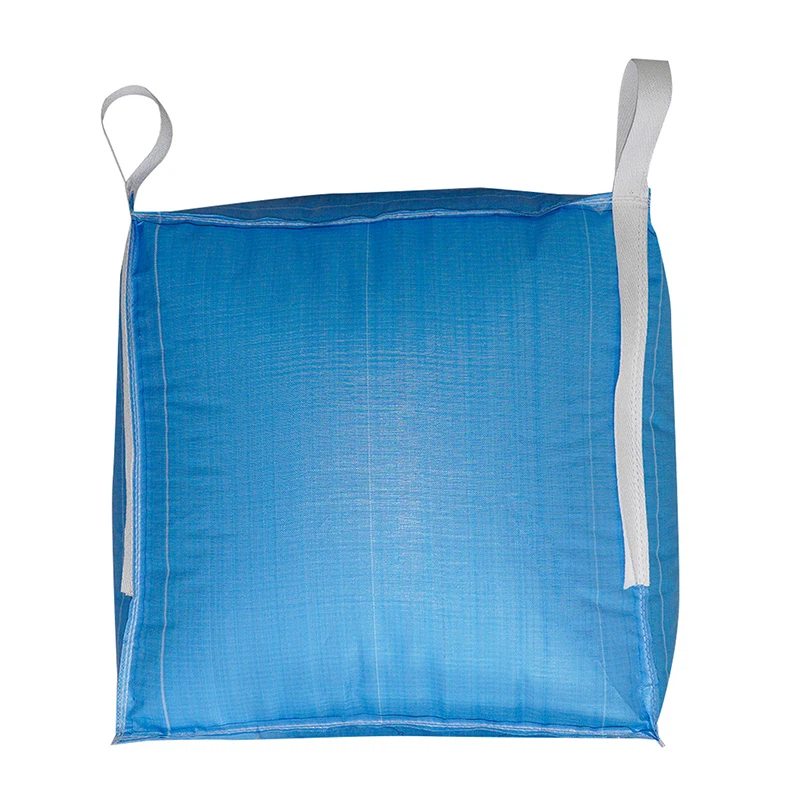
Excellent Breathability, Ensuring the Safety of Goods.
High-strength Structure, More Reliable Loading Capacity.
Environmentally Sustainable, Reducing Comprehensive Costs.
Flexible Customization, Adapting to Diverse Needs.
Production Market
Ur products have been exported to multiple countries and regions worldwide, including:
India, Indonesia, Vietnam, Japan, South Korea, etc.Germany, France, Italy, Spain, etc.United States, Canada, Brazil, Argentina, etc.
Service Advantages
We have an experienced sales team that can provide professional products according to your needs.We support customization on demand. You can provide us with samples or drawings, and we will arrange production according to your requirements.24-hour online service, timely and fast quotation for you.
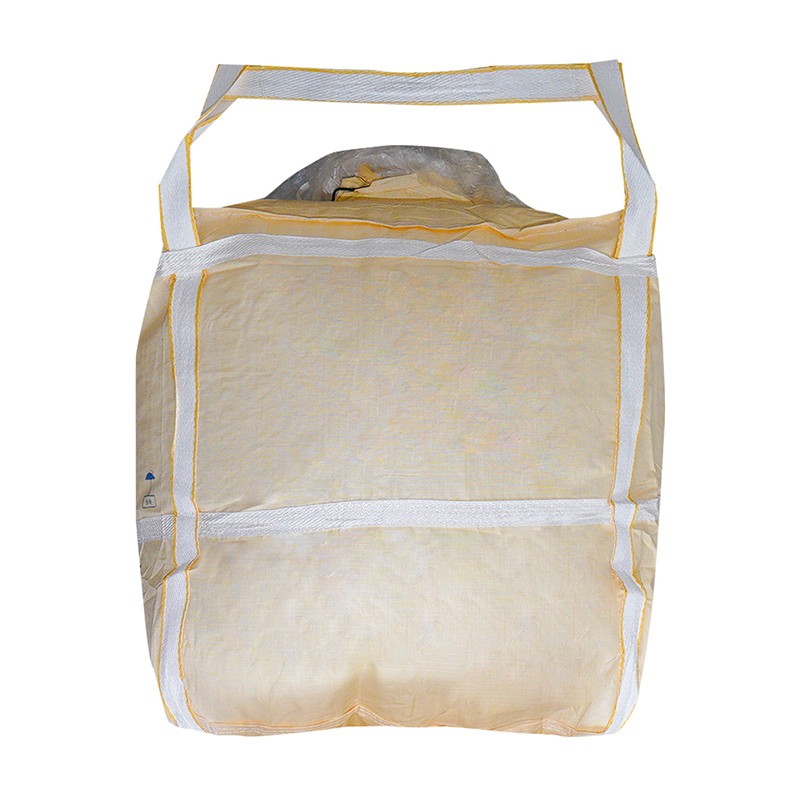
Constructed mainly from polypropylene woven fabrics, bulk bags offer significant advantages such as high tensile strength and durability. These attributes ensure that the bags are resilient enough to withstand the rigors of transportation and storage, whether it be for industrial minerals or food-grade items.When it comes to storing and transporting large volumes of goods, bulk bags stand as an irreplaceable solution in a myriad of industries. Also known as Flexible Intermediate Bulk Containers (FIBCs), these multi-functional containers are pivotal in handling a range of materials, from agricultural produce to hazardous chemicals.
|
Material |
100% virgin polypropylene (Coated,Uncoated) |
|
Color |
White, Black, Orange, Blue or as customer requirements |
|
Contruction |
Tubular, U-panel, 4-panel Baffle Bag(Q-Bags) FIBC Bulk Big Bag |
|
Top Option |
Top full open/Filling spout/ skirt cover |
|
Bottom Option |
Flat bottom, discharge bottom |
|
Loop |
Cross corner loops, side-seam loops, with rope |
|
Fabric |
130gsm ~ 220gsm |
|
Size |
As customer's requirements |
|
Safe factor |
3:1, 5:1 or as customer's requirements |
|
Stitching |
Plain stitching, chain stitching, overlock stitching |
|
Printing |
As requested |
|
UV treatment |
UV treated, or as customer's requirements |
|
Liner |
PE liner, tubular liner, thickness as requested |
|
Document pouch |
Yes or no |
|
Packing |
Bale packaging or pallet packaging 20bales(pallets)/20'FT, 44bales(pallets)/40'HQ |
Advantages of Bulk Bag
Here's why bulk bags are so popular for handling, storing, and transporting bulk materials:
Cost-Effective
Bulk bags can hold a large volume of material, reducing the need for multiple smaller containers. In addition, their lightweight design helps lower transportation costs compared to rigid containers.
High Capacity
Bulk bags are large lightweight bags capable of holding up to 2,000 kilograms, making them perfect for bulk storage, transportation of heavy or dense materials, and even for heavy furniture lifting in industrial settings.
Space-Saving
Bulk bags are collapsible when empty, allowing for easy storage and minimal space usage. When not in use, they can be easily folded and stored, making them a space-saving solution for warehouses and storage facilities.
Versatility
Bulk bags can handle a variety of materials, including grains, sand, cement, chemicals, and even hazardous goods. They are available in different sizes and specifications to suit various needs.
Durability
Bulk bags are made from strong woven polypropylene, designed to withstand heavy loads and rough handling. Despite their strength, they remain lightweight and flexible, which enhances their ease of use and transport.
Ease of Handling
Bulk bags are equipped with lifting loops for forklift or crane handling, making it easier to load and unload. Some designs even include spouts for controlled discharge of materials.
Environmental Benefits
Many bulk bags are made from recyclable polypropylene, which helps reduce environmental impact. When handled properly, they can also be reused multiple times, making them an eco-friendly and sustainable choice.
Customisation
Customisable options include UV protection, different inlet/outlet designs, and branding with logos. These features allow businesses to tailor bulk bags to meet their needs, such as protecting materials from sunlight or improving efficiency during filling and unloading.
Safety
Bulk bags are designed to safely store and transport hazardous materials. They come with options for anti-static or conductive properties to prevent static electricity build-up and adhere to a safe working load capacity for added security.
Type of Bulk Bag
Open top bulk bags
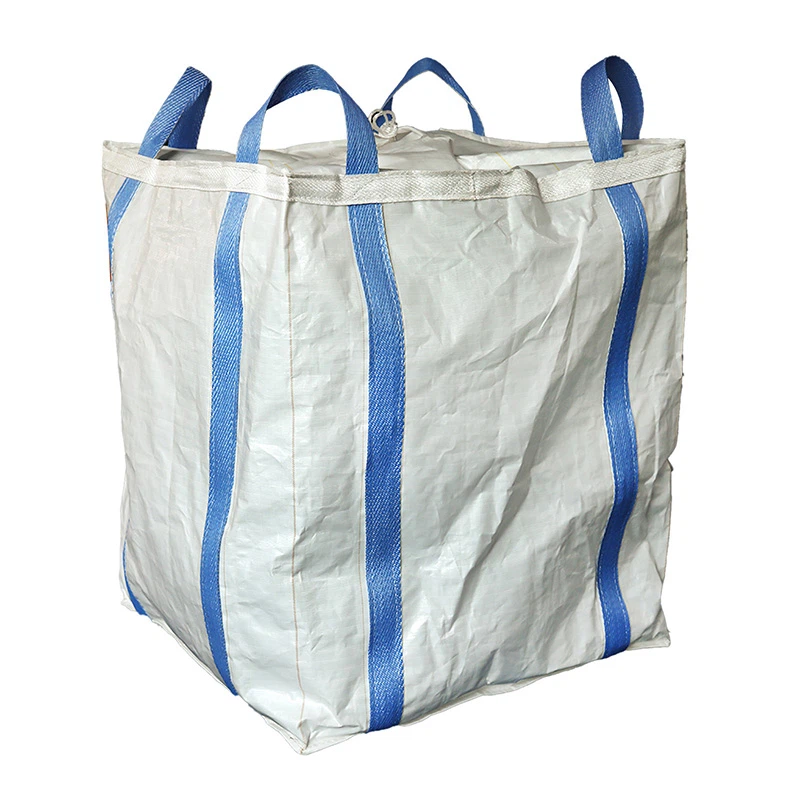
Open top bulk bags are cubes made of woven plastic on five sides, with the top entirely open. In industries that need to fill bulk bags manually, open top bulk bags are an excellent choice.
Duffle top bulk bags
Duffle top bulk bags have extra fabric at the top that allows users to open and close the top inlet completely. Duffle top bulk bags are ideal choices in industries where complete coverage of transported and stored materials is essential.
Spout top bulk bags
Spout top bulk bags are similar to duffle top bulk bags except that they have spouts in place of closable fabric. These bags are ideal for industries that need to fill bulk bags quickly, efficiently and with minimal spills.
Baffled bulk bags
Baffled bulk bags are similar to open top bulk bags — they are open at the top — but they have additional sturdy interior linings. These lining panels allow the bag to maintain its fixed cubic shape no matter what material it contains or how heavy that material is. Baffled bulk bags are ideal for industrial applications in which bulk bags will be stacked or packed tightly into a small space.
Applications of Bulk Bag
Below are a few of the industries in which these different styles of woven plastic bulk bags are beneficial:
Agriculture: Bulk bags are incredibly useful in the agricultural industry. Many agricultural products, like seeds, grain and feed, require reliable methods of storage and transport. Bulk bags fill this role efficiently and reliably, and chemical-free food-grade bags are perfect for agricultural products intended for human or animal consumption, such as flours, corn and rice. Spout top bags make pouring easy, and duffle top bags are great options for providing extra protection for consumable products.
Construction: The construction industry often needs to transport and store bulky materials such as sand, gravel, cement, bricks, lumber, nails and other supplies. Bulk bags make an excellent fit for the construction industry because of their strength, durability and safety. Open top bags are great options when bulky materials may not quite fit into the bag space, and baffled bags are smart options when materials need to be stacked for storage or transport.
Food processing: The food processing industry makes use of many materials such as flours, grains, sugars, beans and other dry bulk products like potatoes and onions. Food-grade, chemical-free bulk bags make excellent transport and storage vessels for these items — And for pet food products as well. Spout top bags make pouring dry bulk products easy, open top bags allow for maximum ventilation, and duffle top bulk bags offer extra protection for food products.
Mining: Mining operations need to transport valuable materials such as coal and metal ores, as well as process materials and byproducts like gravel, rock and soil. Durable, flexible bulk bags offer excellent options for the mining industry. Open tops allow for overfilling at the top of the bag, and baffled bulk bags make stacking and storing mining products convenient and easy.

Bulk bags are a great bag that can be used for the storage and transport of bulk products. Most of the bags are usually made of woven polypropylene. The size can be customized according to the needs of the customer. Sacks and bags, as a rule, contain roughly 2000-4000 rubles for the product. You can save a lot of money and time on mobile devices, since they can be placed on shelves or on to get the aid of standard lifting straps that are built-in to the bags. The majority of parcels can fit in any size to meet the needs of our customers. The large pockets can be created for the individual needs of the client, depending on the type of product you have and the type of equipment, package their products in a bag. They offer high-quality bags, which are extremely strong and flexible.
He use of Bulk bags
First, hang the lifting ring of the container bag symmetrically on the beam of the filling machine, so that the bottom of the container bag is basically in contact with the ground, then open the loading port of the container bag, put it into the charging barrel and clamp it by the clamping device to avoid dust or particle leakage. Start the filling machine to put the raw materials into the bag from the charging port, and straighten the bag body before filling. After filling, close the charging port. If using a container bag with a discharge port, check whether the bottom is tied well before filling.
Hang the lifting ring of the container bag on the lifting device evenly. According to the type and loading weight of the container bag, forklifts, cranes, cranes, etc. can be selected. If a forklift is used to lift the container bag, the shovel plate should be adjusted to an appropriate position, and the container bag should be close to the forklift and not tilted forward. In order to ensure the balance of the center of gravity of the bag body during hoisting, be careful not to hang a single ring. Then, start the lifting device to slowly lift the container bag, and after reaching a certain height, evenly lay it on the train (or car) platform. If they do not need to be loaded and transported away immediately, they should be stacked neatly and uniformly at the workplace. During the hoisting and stacking process, they should not be squeezed, skewed, or collided with each other.
In principle, after the container bag is loaded, it should be loaded and left immediately, but if necessary, it cannot be transported immediately. In order to avoid material damage, the container bag should be stored in the warehouse, and the surrounding environment should be kept away from water, steam, humidity and High temperature sources, such as when stored outdoors, in addition to meeting the above environmental conditions, should also be covered with tarpaulins and avoid direct sunlight.
Lift the container bag with a forklift or crane, align it with the mouth of the trough or other container, open the tether at the bottom of the bag body, and the raw material can fall by itself to complete the unloading. For single-use container bags, a suitable tool can be used to puncture the bottom of the bag at a distance to discharge the material. During lifting and unloading operations, do not stand under the bulk bags.
Bulk Bag Components
While bulk bags are relatively simple in design, there are some variable features that need to be determined when selecting one to best meet your material handling requirements. Following is an illustration and top to bottom list of these components:
| Bulk Bag drawing |  |
|
Fill Spout or Top Spout: |
This is the flexible sleeve typically located in the center of the top panel through which material enters when the container is being filled. |
|
Lifting Loops: |
These are usually closed-loop straps 8-12 inches long located at the four corners of the top panel. These type of loops are the most common and easiest to use with bag filling and emptying stations, but they can be supplied in other configurations including corner straps (connects with the adjacent corner) or cross-corner straps. |
|
Bag Body : |
The bag body is the rectangular portion in which the solids or powders are held. The length, width and height of the body are critical when designing a system. For instance, the height of this section will ultimately affect the overall stack-up height of the equipment, and the total volume will determine the system’s lifting capacity based on the bulk density of the material. |
|
Liner|: |
When a product is moisture/air sensitive, very fine or toxic, an impermeable liner can be used to keep the product better contained. It is important to know how these liners are attached to the inside of the bag and the dimensions associated with it. |
|
Bottom Spout: |
The bottom spout is used to empty solids/powder from a bulk bag. Knowing the spout length, spout diameter and location of the cinch-tie closure on the spout are all critical to designing the system’s interface with the spout to enable dust-free handling. Often, a spout clamping device is used to secure the spout onto a material discharge nozzle, and a spout closure device is used to prevent material flow while untying the cinch-tie on the spout. |